Every business accumulates clutter over time. A few extra approval steps creep in, a report gets built by hand because nobody set up the automation, and two people end up doing slightly different versions of the same task. None of it looks serious on its own. Added together, it quietly slows the whole operation down.
Cleaning that up is what streamlining is really about. The benefits of streamlining business processes go well beyond saving a few minutes, though that matters too. Done properly, it changes how a company runs day to day, how predictable its results are, and how much room the owner has to grow the business instead of holding it together.
What Is a Streamline Process, Really
A streamlined process is one stripped down to the steps that genuinely add value. The core moves behind any real streamlining effort:
- Removing anything redundant or duplicated
- Automating the parts that no longer need a person
- Shortening the path from start to finish
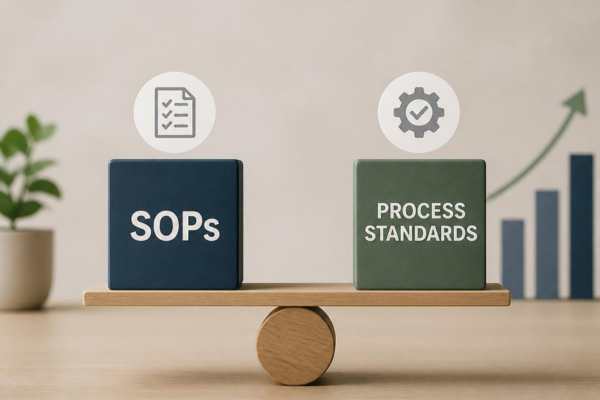
- Documenting the result so it stays consistent
The streamlining meaning in business is often misread as cutting corners. It is closer to the opposite. The goal is not to do less of the important work but to stop wasting effort on the parts that never needed a person in the first place.
A clean approval chain still gets the right sign-offs. It just gets them without three follow-up emails and a two-day wait.
The Real Cost of Messy Operations
The damage from inefficient processes is bigger than most owners realize because it spreads out and hides across the operation. The most expensive places it shows up:
- Lost revenue: Market research firm IDC has found that companies lose 20 to 30 percent of revenue each year to inefficient processes
- Wasted hours: McKinsey research shows that employees spend roughly 1.8 hours every day searching for information they need to do their jobs, which adds up to almost a full day of lost labour each week
- Quiet morale damage: Capable people get worn down by friction, and the best employees are usually the first to notice and the first to leave
None of these costs show up as a line item, which is exactly why they go unaddressed for so long. The numbers stay hidden in payroll, in slow turnaround, and in customer goodwill that slowly erodes.
Faster Work, Fewer Mistakes
The most immediate benefit is speed. A streamlined process removes the waiting and the back-and-forth, so work moves through the company in a fraction of the time. The shifts that show up first:
- Orders ship sooner and with fewer hold-ups
- Clients get answers faster, which improves retention
- Projects stop stalling at the same predictable bottlenecks
- Errors drop as each manual step gets removed
- Fewer apologies, fewer corrections, fewer recovery hours
There is a compounding effect, too. A faster, cleaner process frees up hours that get reinvested into better work, which then improves the process further over time. Companies that commit to this kind of steady improvement tend to pull ahead steadily rather than all at once.
More Capacity Without More Hires
One of the most practical benefits is capacity. Streamlining in business lets a company handle more volume without adding headcount for every increase. The capacity returns in specific ways:
- The existing team absorbs growth instead of drowning in admin
- Owners stop being the bottleneck for routine decisions
- Time gets redirected toward winning clients and improving the offer
- Hiring decisions become strategic rather than reactive
- Growth stops depending on everyone working longer hours
That matters most for service businesses, where the owner is often the operational ceiling on growth. Removing low-value tasks from their plate, and from the team’s, creates real space for the work that actually moves the business forward.
Cleaner Data and Better Decisions
A streamlined process produces cleaner information almost as a side effect. When work flows through consistent steps, the data it generates is consistent too. Reports become reliable. Numbers stop contradicting each other. The owner can trust what the dashboard says without checking it against memory or a back-of-the-envelope estimate.
That reliability changes how decisions get made. Instead of guessing or waiting days for someone to pull figures together by hand from three different spreadsheets, leaders get a clear picture in close to real time. Good decisions depend on good information, and messy manual processes rarely produce it.
A Business That Is Easier to Scale or Sell
The longer-term benefit is structural. A company built on clean, documented processes is far less dependent on any single person, including the founder. What that independence delivers:
- Less risk for buyers, investors, and potential partners
- A higher valuation multiple when the time comes to sell
- Smoother transitions if the owner steps back or takes time away
- Faster onboarding for new hires, since processes are written down
- Confidence among existing staff that the business is built to last
One that relies on the owner’s memory and constant involvement is a risk. One that runs on clear, repeatable systems is an asset. Streamlining now builds the kind of operation that holds its value later, whether the plan is to grow it, step back, or sell it.
How to Start Without Overhauling Everything
The mistake is trying to fix everything at once. A better approach starts small and works through one process at a time. A reliable sequence:
- Pick the process causing the most friction, the one that always gets stuck or generates complaints
- Map out how it actually works, not how it is supposed to
- Cut the steps that add nothing to the final result
- Automate what can run on its own without losing control
- Document the cleaned-up version so it stays consistent
- Test it, refine it, then move on to the next process
Steady progress on one workflow at a time adds up to an operation that feels noticeably lighter within a few months.
Building Operations That Carry Growth
The benefits of streamlining business processes come down to one thing: a company that runs on structure instead of effort. Less waste, fewer errors, more capacity, and a business that can grow without grinding its people down.
That is the work Optimize Business Systems helps founders do. Through the Inner Circle program, members get:
- Frameworks for mapping operations and finding the highest-impact processes to clean up first
- Weekly guidance from operators with hands-on experience across service-based businesses
- Proven tools and templates for documenting and refining workflows
- A community of growth-minded owners building scalable, sellable companies
Book a strategy session with the OBS team today and start building a business that runs the way it should.