





Introduction: Growth Without Visibility Creates Chaos
Many business owners focus heavily on growth.
As the business grows, it gains more clients, hires more employees, and generates higher revenue.
But growth alone doesn’t create scalability.
In fact, scaling before understanding how work actually flows through your business can create more problems than it solves.
Without clear processes, every new customer, project, or employee adds complexity. Communication becomes harder. Accountability becomes unclear. Mistakes become more frequent.
This is why process mapping is one of the most powerful tools for businesses that want sustainable growth.
At Optimize Business Systems, process mapping is a foundational component of the OBS Compass Program because visibility is the first step toward optimization.
You can’t improve what you can’t clearly see.
What Is Process Mapping?
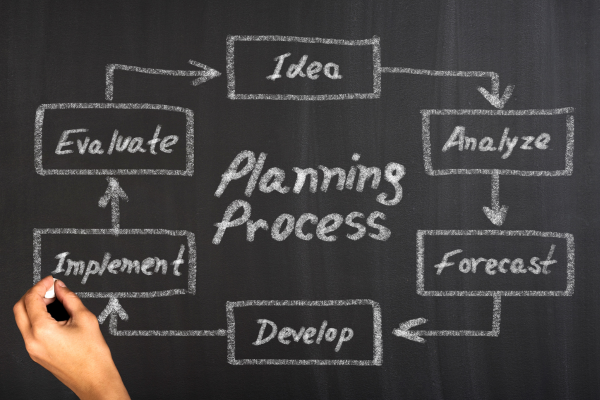
Process mapping is the practice of visually documenting how work moves through your organization from start to finish.
As a result, leaders gain a clearer understanding of responsibilities, decision points, bottlenecks, and communication gaps.
Instead of relying on assumptions or verbal explanations, leaders gain a complete view of how operations actually function.
This visibility helps leaders spot problems that are easy to miss during daily work.
Many companies are surprised to discover how many unnecessary steps, duplicate efforts, and delays exist within their workflows.
Once those inefficiencies become visible, they become fixable.
Why Most Businesses Operate Reactively
In many organizations, processes evolve naturally over time.
A task gets assigned.
Someone develops a shortcut.
Another employee creates a different approach.
Before long, multiple versions of the same process exist.
This often leads to:
- Inconsistent execution
- Employee confusion
- Duplicated work
- Missed deadlines
- Communication breakdowns
- Leadership dependency
Without documented workflows, employees rely on memory, habits, and verbal instructions.
As teams grow, this creates significant operational risk.
What works with three employees often falls apart with ten.
What works with ten employees often breaks at twenty.
Process mapping replaces reactive operations with intentional systems.
Instead of hoping everyone follows the same process, the process becomes visible, documented, and repeatable.
Scaling Requires Repeatable Systems
One of the biggest misconceptions about growth is that hiring more people automatically increases capacity.
In reality, adding people to broken systems often creates more complexity.
Every new employee requires:
- Training
- Communication
- Accountability
- Coordination
Without repeatable systems, growth creates confusion instead of efficiency.
Businesses that scale successfully rely on standardized workflows for critical functions such as:
Onboarding
Ensuring new employees become productive quickly.
Sales
Creating consistent customer experiences and predictable revenue generation.
Communication
Providing clarity around responsibilities and expectations.
Project Management
Keeping work organized, visible, and accountable.
Reporting
Giving leaders reliable information for decision-making.
Accountability
Ensuring ownership exists at every stage of execution.
The OBS Compass Program helps businesses document and optimize these systems before growth places additional strain on operations.
Process Improvement Creates Operational Efficiency
Once workflows are mapped, leaders gain the ability to improve them strategically.
Rather than guessing where problems exist, they can identify opportunities with confidence.
Process improvement often includes:
- Removing unnecessary steps
- Eliminating duplicate work
- Simplifying approvals
- Automating repetitive tasks
- Clarifying ownership
- Improving communication flow
Small improvements across multiple workflows create significant operational gains over time.
The result is greater operational efficiency without requiring additional effort from employees.
Teams spend less time navigating confusion and more time executing meaningful work.
The Connection Between Process Mapping and Leadership Freedom

Many business owners unknowingly become the answer to every operational question.
Employees seek approval.
Managers escalate decisions.
Departments depend on leadership for clarification.
This creates a cycle where growth increases leadership workload instead of reducing it.
Process mapping helps break that cycle.
When workflows are documented and ownership is clearly defined:
- Teams become more self-sufficient
- Decisions happen faster
- Accountability improves
- Leaders spend less time troubleshooting
Eventually, the business becomes less dependent on individual knowledge and more dependent on structured systems.
That shift is critical for long-term scalability.
How the OBS Compass Uses Process Mapping
The OBS Compass Program uses process mapping as a strategic tool to strengthen operational alignment.
Rather than documenting processes for the sake of documentation, the Compass connects workflows directly to business performance.
Ultimately, process mapping helps align:
People
Clarifying responsibilities and ownership.
Systems
Ensuring tools and workflows support one another.
Accountability
Creating visibility around expectations and outcomes.
Execution
Turning strategy into consistent action.
This integrated approach creates smoother operations, stronger communication, and greater organizational resilience.
What Happens When Workflows Become Visible
Businesses often experience immediate benefits once workflows are mapped and optimized.
They gain:
- Faster execution
- Greater consistency
- Improved collaboration
- Better accountability
- Reduced operational friction
- Increased scalability
Most importantly, they gain clarity.
And clarity is one of the most valuable assets a growing business can have.
Because when everyone understands how work moves through the organization, performance becomes easier to improve.
Final Thought: You Can’t Scale What You Can’t See
Growth magnifies everything.
Strong systems become stronger.
Weak systems become more painful.
Process mapping allows leaders to identify operational weaknesses before they become expensive problems.
Instead of reacting to growth-related challenges, businesses can proactively build the structure needed to support future success.
⚡ Bottom Line
Process mapping turns operational chaos into clarity.
If you want scalable growth, your workflows must be visible, repeatable, and optimized. The OBS Compass Program helps businesses build the operational structure needed to grow with confidence.